

Key Takeaways
-
An airpark purchase should be evaluated as both a home purchase and an aviation decision.
-
Runway access, surface, dimensions, and maintenance responsibilities can be more important than interior finishes.
-
Hangar dimensions, door clearance, drainage, electrical capacity, and storage space should be verified in person.
-
Easements, association documents, insurance, permits, and future assessments need careful review before closing.
-
Visiting at different times helps reveal the real pace of aircraft activity and community life.
Buying an airpark home in the Carolinas means evaluating two connected assets: a residence and a place from which you can operate, store, and enjoy an aircraft. Buyers researching aviation real estate can turn to Carolina Airparks, a specialized resource focused on airpark homes, hangar properties, private airstrips, and direct runway-access opportunities across North Carolina and South Carolina. Its Carolinas-specific focus helps buyers compare the practical details that matter well beyond bedrooms, acreage, and curb appeal.
From mountain-adjacent communities to the Piedmont and coastal plain, each property brings its own mix of runway conditions, drainage considerations, local rules, and lifestyle tradeoffs. A beautiful house can still be the wrong purchase if its runway does not suit your aircraft, the hangar has limited clearance, or the recorded documents do not provide the access rights you expect.
Why Airpark Buying Is Different
A standard residential purchase centers on the house, lot, utilities, and neighborhood. An airpark purchase may also include a shared runway, taxiways, common areas, hangar access, operating rules, and an owners’ association. Those features may be privately owned, jointly maintained, or governed by documents that deserve the same attention as the deed and inspection report.
Start by separating what is physically visible from what is legally included. A taxiway beside the lot is not automatically a transferable right to taxi an aircraft. Ask for the title commitment, plat, recorded easements, covenants, bylaws, rules, and any agreements governing runway use.
Define Your Flying Needs Before Touring
Create a short aircraft and lifestyle profile before falling in love with a view or kitchen. Include your current aircraft, wingspan, tail height, turning needs, likely future aircraft, typical passenger load, and preferred runway surface. Also, identify whether you need runway lighting, nearby fuel, a workshop, climate-controlled storage, or room for visiting aircraft.
This list keeps the search practical. A short grass runway may be ideal for one pilot and unsuitable for another. Likewise, a hangar that accommodates a light aircraft today may become restrictive if you expect to buy a wider, taller, or heavier aircraft later.
Inspect the Runway and Taxiway
Look Beyond the Published Dimensions
Verify runway length, width, orientation, surface, slope, drainage, and condition on site. Walk or drive the area with permission, and pay attention to soft spots, erosion, standing water, vegetation, low areas, and obstructions near entrances or turns. In the Carolinas, a property’s response to heavy rain can be particularly important for turf strips, taxi lanes, hangar aprons, and access roads.
Ask who mows, grades, resurfaces, repairs lights, maintains drainage, and pays for those tasks. Request maintenance records and recent meeting notes when a community association is involved. Airport owners and managers are responsible for maintaining airport information, so buyers can also ask whether the listed details have been checked against current airport data changes and community operating documents.
Bring a qualified pilot, aviation consultant, or another professional familiar with your aircraft category. A residential home inspector can identify common home defects, but aviation access and aircraft maneuvering require a different level of review.
Measure the Hangar for the Aircraft You Actually Own
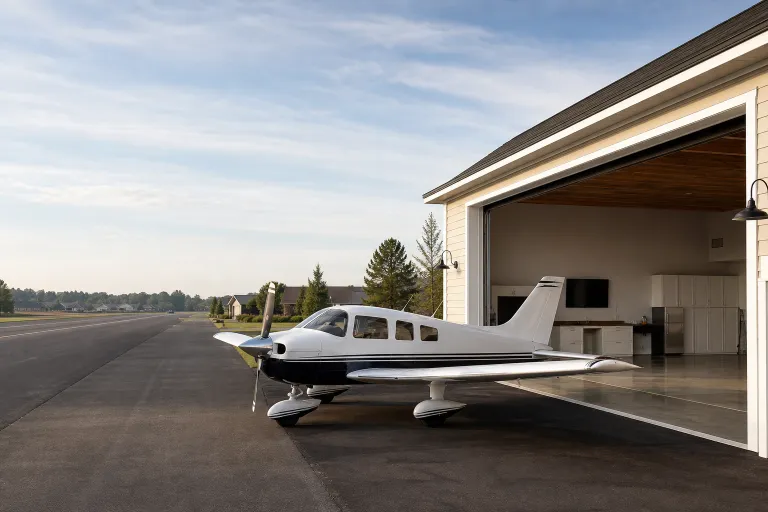
“Large hangar” is a description, not a measurement. Confirm the clear width and height of the door opening, interior width and depth, ceiling height, slab condition, floor slope, lighting, electrical service, ventilation, and drainage. Measure usable space with the door open, not simply the building’s exterior footprint.
Consider the complete movement path. An aircraft may fit inside but still lack safe wingtip clearance for turning, opening the hangar door, accessing baggage compartments, or moving around a workbench. Ask about permitted fuel storage, fire protection, insulation, heating or cooling, and whether vehicle storage competes with aircraft space.
Review Easements, Covenants, and Community Rules
Read every document that affects aircraft access and everyday ownership. Focus on runway and taxiway easements, access rights that run with the land, aircraft size or weight limits, guest policies, flight-training restrictions, business-use rules, and standards for hangars, fences, landscaping, lighting, or additions.
Also request the association budget, reserve information, insurance details, board minutes, pending assessments, and known disputes. A planned runway repair or drainage project may be sensible, but it can still affect your near-term ownership costs. Have unclear provisions reviewed by a real estate attorney familiar with the state where the property is located.
Check the Home, Land, Utilities, and Total Cost
Aviation features should not distract from ordinary due diligence. Order a full home inspection and investigate the roof, foundation, HVAC, electrical system, plumbing, well, septic system, drainage, private roads, boundaries, and permits. A survey can help identify encroachments, while specialists may be appropriate for structural, septic, or drainage concerns.
Build an ownership budget that includes more than the mortgage payment:
-
Association dues and runway maintenance contributions.
-
Hangar door, roof, slab, electrical, and apron repairs.
-
Home, hangar, liability, and aircraft-related insurance needs.
-
Private road, gate, well, septic, and utility expenses.
-
Potential special assessments for shared infrastructure.
Consider Daily Life and Future Resale
Visit more than once, including a weekday and a weekend. Spend time outdoors near the home, hangar, and runway. Ask residents about busy flying periods, quiet hours, guest activity, community gatherings, and seasonal conditions. The right fit depends on whether you want a social pilot community, a quieter retreat, or a balance of both.
Think about resale before making an offer. Direct runway access and a functional hangar can be highly valuable to the right buyer, but aviation property serves a more specialized audience than a conventional home. Clear access rights, well-maintained shared facilities, sensible restrictions, dependable utilities, and a residence that appeals beyond its hangar can support broader long-term appeal.
Use a Runway-to-Closing Checklist
-
Confirm that the runway suits your aircraft and typical operating needs.
-
Measure hangar door clearance, interior space, and aircraft movement paths.
-
Verify recorded runway and taxiway access rights.
-
Read all covenants, association rules, budgets, and meeting records.
-
Inspect the house, hangar, runway-adjacent areas, and utilities.
-
Review permits, boundaries, drainage, insurance, and financing requirements.
-
Visit at different times and talk with residents before finalizing the purchase.
Final Thoughts
The best North or South Carolina airpark home is not necessarily the biggest house or the newest hangar. It is the property that supports your aircraft, your budget, your daily routine, and your long-term plans with reliable access, clear rights, manageable responsibilities, and a community that feels like home.
